Domain
Machine LearningNatural Language ProcessingArabic NLPAdversarial MLSecuritySystem Design
Software Engineer • Machine Learning & Security
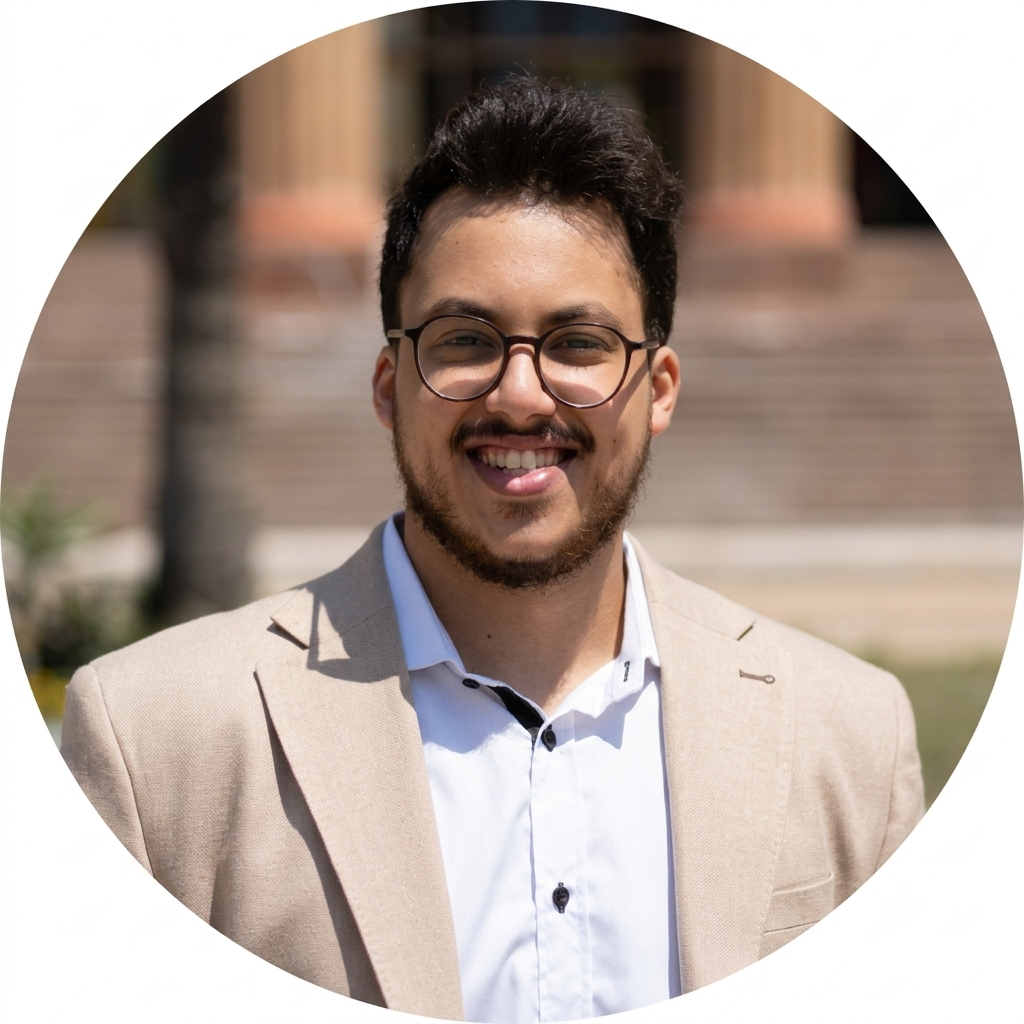
I am a software engineer focused on the intersection of Machine Learning and Security. I build where complexity meets consequence, driven by the belief that software is not just a career, but a tool for meaningful impact. Beyond the technical stack, I consider myself a lifelong student. I spend a significant amount of my time researching and learning, not just within Computer Science, but across any field that sparks my curiosity. I believe that the most innovative solutions come from looking outside your own bubble and applying diverse perspectives to technical challenges. I’m not here to just go through the motions of a career. I want to leave a lasting mark through the things I build and the knowledge I share. This site is my way of documenting that journey: a place where I ship my projects, share my research, and distribute what I’ve learned to others. I am always looking for meaningful work and collaborations that move the needle. If you have an opportunity or just want to chat, feel free to reach out.
﷽ ﴿ وَقُلِ ٱعۡمَلُواْ فَسَيَرَى ٱللَّهُ عَمَلَكُمۡ وَرَسُولُهُۥ وَٱلۡمُؤۡمِنُونَۖ وَسَتُرَدُّونَ إِلَىٰ عَٰلِمِ ٱلۡغَيۡبِ وَٱلشَّهَٰدَةِ فَيُنَبِّئُكُم بِمَا كُنتُمۡ تَعۡمَلُونَ ﴾ [التوبة: 105]
 Data Engineer at Ejada Systems
  Deep Learning R&D Intern at Alexandria University
  Software Engineer Intern at One Health Network
 Research into how carefully crafted inputs expose vulnerabilities in Arabic NLP models. Implemented and benchmarked character-level and transformer-based word-level attacks, with a focus on Arabic, a language underexplored in adversarial ML due to its complex morphology.
End-to-end computer vision pipeline that automates archery scoring from a single photograph. Fine-tuned YOLO26s detects arrow tips and maps pixel-space distances to World Archery ring values through a custom geometric scoring engine. Achieved 0.875 mAP50 at 6.3ms per image.
Comparative study benchmarking five architectures on predicting Arabic words from their definitions, built on ~97,000 lexical entries. Progresses from TF-IDF through fine-tuned Arabic Transformers to LLMs with RAG, with Qwen3.5-4B achieving 39.8% Top-1 under morphological evaluation with no fine-tuning.
From a single photo to a full scorecard: building a computer vision pipeline that detects arrows and scores an archery target automatically.
Given an Arabic definition or description, predict the word it describes.
Bachelor of Engineering, Alexandria University Comprehensive deep learning course covering neural networks, CNNs, RNNs, and practical applications.